
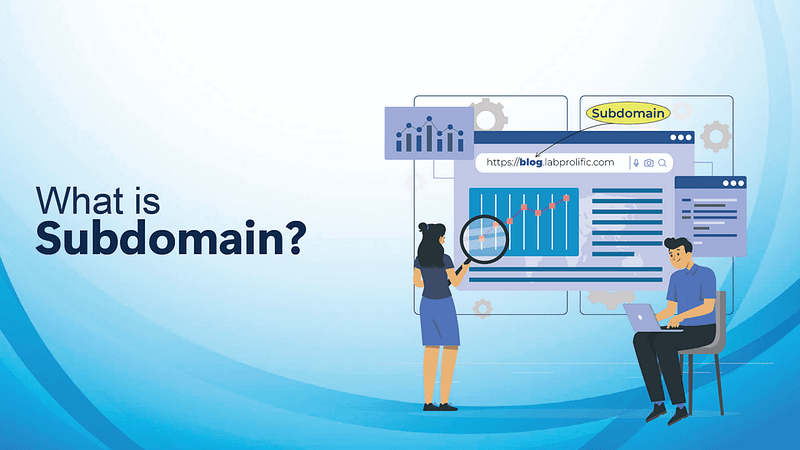
Don’t have any idea about what is subdomain? Experts say using subdomains on your website can result in a smoother user experience and extra traffic.
Using subdomains in your website URL can affect your website in different ways. The controversy about the effect of subdomains on the site’s SEO is never-ending.
There are Both positive and negative aspects of subdomains. Both seem to have equally strong grounds.
After you finish this article, you will have a clear idea about what is subdomain and how to build one. You will also get a basic concept about domain, subdirectory when to use a subdomain, and how it affects the SEO.
What Is Subdomain?
A subdomain is an additional part of your website URL which sits before the main domain. It creates several sections or partitions on your website, while being apart from the main website.
You can use subdomains for various purposes. Such as, to provide more details, improve user experience, catalog content, or channel audiences to other parts of your website. In simple words, it is a different part of the website while being linked to the main website.
What Is an Example of a Subdomain?
Usually, there are three main parts of a website- protocol. They are subdomain, domain/main domain, and top level domain (TLD). If we dissect the website https://blog.hubspot.com, “https://” is the protocol; “blog” is the subdomain; “hubspot” is the main domain and “.com” is the top level domain.
Use Cases of Subdomain
Now that you know what is subdomain, let’s see in which cases you get to use a subdomain.
Blog
Subdomains can be very useful in placing blogs on your website. Sometimes blogs can contain keywords or topics that are not directly linked to the main site. In these cases, you can use subdomains to place blogs separately in your site.
Mobile site
Many websites often rebuild their site to enhance their performance in smartphones. These mobile sites are usually situated under subdomains. “https://m.twitter.com” is an example of a mobile site for twitter.
eCommerce
Many online businesses place their online store into separate websites to avoid complicity on the main site. Subdomains are very useful for these types of operations.
Customer support
Answering the queries of the audience is very helpful to improve the customer service experience. Website owners often place the “customer support” section in a separate subdomain. This arrangement makes the website more SEO-friendly and easy to browse.
How to Build a Subdomain?
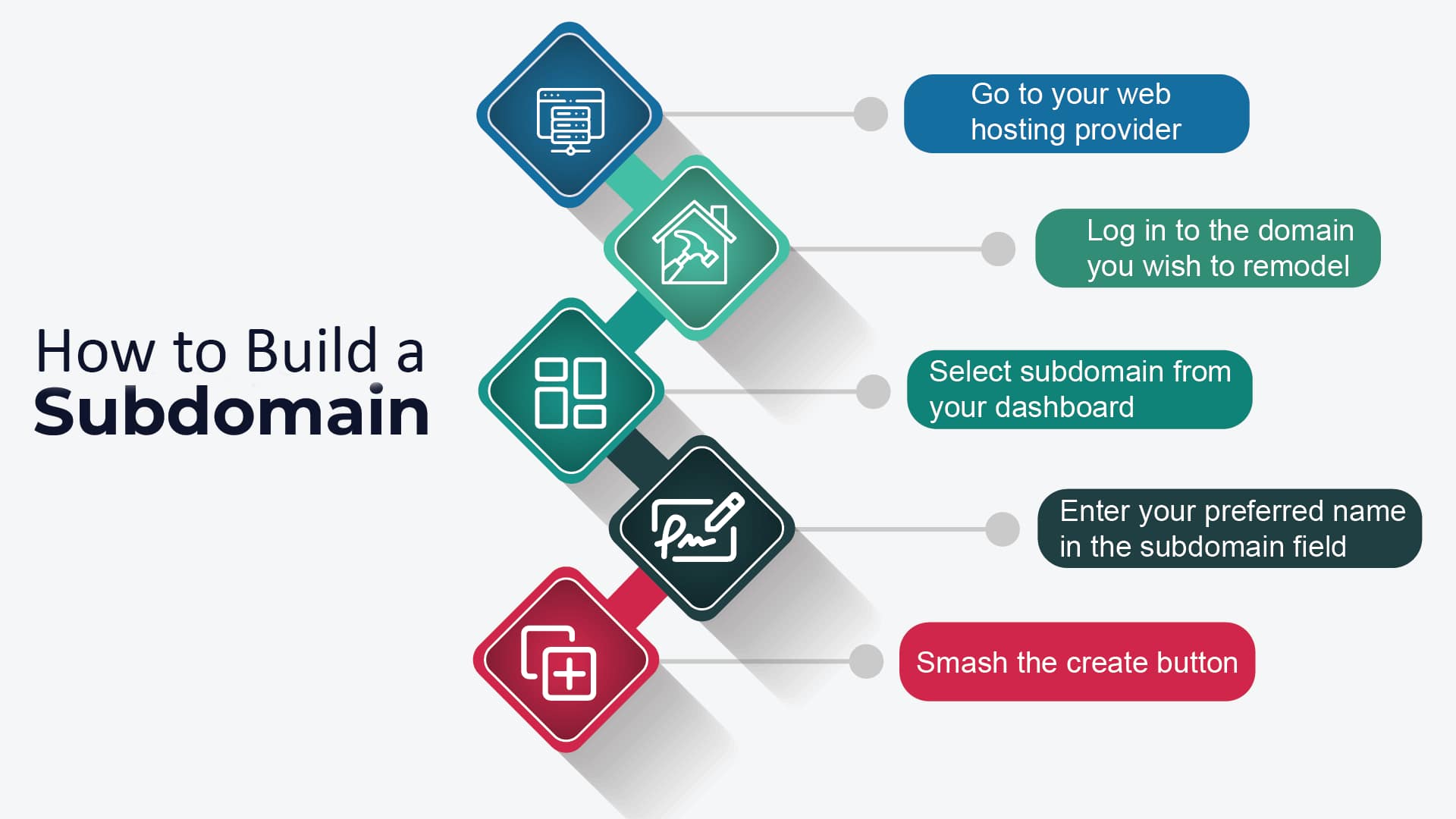
Creating a subdomain these days is child’s play with some simple procedures, thanks to today’s advanced web hosting providers. Some renowned web hosting providers are Namecheap, Hostinger, Dreamhost, Hostgator, Cloudways etc.
All you need to do is follow some steps:
Step 1– Go to your web hosting provider
Step 2– Log in to the domain you wish to remodel
Step 3– Select subdomain from your dashboard
Step 4– Enter your preferred name in the subdomain field
Step 5– Smash the create button
The new subdomain will be displayed from now
Was it so hard? Of course not.
Are subdomains free?
If you already own the domain, then the answer is NO. You can create subdomains free of charge if you own a domain.
How many subdomains can an URL have?
You can add a least of 100 and up to 500 subdomains to your domain for free. Although the numbers can vary among the hosting providers.
Domain vs Subdomain vs Subdirectory
Domain
In simple words, domain is the main name of a website. In a website URL, what comes after the protocol or ‘https://”, is the domain, or main domain. For example, in “https://labprolific.com”, “labprolific” is the domain. Domain is the main name of a business or an organization.
Subdirectory
In an URL, what comes after the main domain is the subdirectory. Subdirectories are mainly used as folders or subfolders to arrange contents of a website. In “https://hubspot.com/pricing”, “pricing” is the subdirectory part
There isn’t much difference between a domain and subdomain. Subdomains are an extension or another section of a domain where the subdomain depends on the domain but not the other way around.
Whereas, the contrast between a subdirectory and a subdomain is often vague to many users. The subdomain sits before the main domain in an URL. Whereas the subdirectory comes after the domain name.
Moreover, the subdomain remains as a part of the main website and Google treats it as a part of the main domain. Yet, Google sees subdomains as a separate sections.
For example, in “https://google.com/mail”, “mail” is the subdirectory part of the URL.
Subdomain or subdirectory; which is better for SEO?
Now comes the long-awaited question- which is better among these for SEO?
There isn’t any straightforward answer to this one. The answer depends on your target for the website.
The key factor to keep in mind is that the subdomain is an entirely separate unit in the eyes of Google. In contrast, Google identifies subdirectories as a part of the main site. Also, subdirectories can be useful for comparatively small websites that don’t contain too much content.
What is subdomain used for?
The real fun of subdomains is that you can use it to organize your website contents in any way you like. Also, you can use it to separate different sections of your website for a better user interface. The most general uses include:
1. To create separate sites for different languages
When you try to operate your business on a multinational basis, you have to keep concerned about audiences from non-English speaking countries. In order to fulfill their needs, you need to manage different sites in different languages. Subdomains can be very handy in these cases. A good number of international brands such as Wikipedia, Google, Twitter, etc. follow this method. They use it to expand their audience outreach and to improve user experience.
2. To create different sites for different services
A website can have many other secondary services such as blogs, e-commerce stores, merchandise, and many others apart from the primary service. Trying to fit all these services in one single site can make the site very clumsy and complicated. Also, it will result in a bad customer experience. To simplify this mess, you can use subdomains to separate your services into different websites. This way you will ensure a smooth journey for the customers.
3. To Make your site more discoverable
By inserting related keywords in your subdomain name, you can give your site an SEO boost. As a result, you can direct more potential buyers toward your site when they type those keywords.
If the name of your brand fails to match the name of your products, it can get pretty challenging to insert related keywords into your main URL. For example, SAMSUNG.
In these cases, subdomains can be your friendly neighborhood savior. By inserting product-related keywords into them, you can make your site more discoverable to potential buyers.
Pros and Cons of Subdomain
That was enough introduction so far. Hope you have a clear concept by now. Now let us look into the benefits and drawbacks of using subdomains.
Advantages of subdomain on SEO
We have gathered some benefits of subdomains on SEO. For your better understanding, let us go through them one by one:
- You can use it to include related keywords in your URL
- Using subdomains properly can enable you to create a smoother path for your customers and enhance the experience of the users
- Subdomains can help your website grow a specialized and niche audience market
- Using subdomains can result in more audience traffic, which will, in turn, will help to increase the domain authority of your site.
Disadvantages of subdomain on SEO
Even the moon has a dark side, so why shouldn’t subdomains? Allow me to browse you through the drawbacks one by one:
- Using subdomains needlessly can distract the focus of SEO from your website
- Sometimes subdomains can make it harder for Google to crawl your site since Google treats subdomains as separate sites. In order to overcome this issue you need to track them separately, making it more complicated
- Adding too many subdomains might affect your site’s originality and make the site more complicated.
How does Google view subdomains?
We are almost done. Before concluding, let’s observe Google’s stance on this topic.
Our expert in this issue happens to be John Mueller. He is what you call a “search advocate”. Mueller is an analyst for Google who coordinated Google’s search-related efforts.
According to Mueller, subdomains usually don’t hamper the rankings of your website. He also claims that the algorithms of Google are very capable. They can crawl into your site and treat subdomains and subdirectories separately. So, the algorithms understand the main intent of your site. In Mueller’s words, “The search engine is smart enough to see your main domain and subdomain as being tied to the same website and is, therefore, able to allocate keywords to the root URL.”
Mueller’s statements started chaos in the SEO society. SEO specialists from all around the globe joined in on this dispute, bashing Google for their generalized comment on the issue.
Conclusion
Hope you have a clear concept about what is subdomain and its consequences on SEO by now. After analyzing the facts and data given till now, only you can make the best decision on this matter.
Only you know the intentions and needs of your website and take the necessary steps to rank your site in the eyes of SEO.